Tracing Pocket Distribution Patterns Across Roulette Formats and Their Influence on Variance Models for Certified RNG Platforms in Regulated Digital Settings
Lars Bennett · Sep 15, 2026

Tracing Pocket Distribution Patterns Across Roulette Formats and Their Influence on Variance Models for Certified RNG Platforms in Regulated Digital Settings
Roulette formats differ in pocket counts and layouts, which directly shapes how random number generators simulate outcomes on certified platforms, and these differences feed into variance calculations used by testing labs in regulated environments, while observers note that European wheels contain 37 pockets including a single zero whereas American versions expand to 38 with both zero and double zero, creating measurable shifts in probability distributions that RNG systems must replicate exactly to maintain certification standards.
Pocket Configurations and Their Statistical Foundations
Data from independent testing facilities shows that pocket arrangements determine the baseline probabilities for each outcome, and researchers map these distributions by tracking frequency across thousands of spins generated through approved algorithms, whereas French roulette maintains the same 37-pocket structure as the European model but incorporates additional rules like la partage that alter effective variance during play sessions on digital platforms.
Analysts examine how these fixed pocket numbers influence the spread of results over extended sequences, and certification processes require RNG outputs to match the exact mathematical expectations derived from each format's physical counterpart, so platforms offering multiple variants must adjust their variance models accordingly to reflect the distinct distributions without introducing bias.
RNG Certification and Distribution Tracing Methods
Certified RNG platforms undergo rigorous evaluation where statistical tools trace pocket hit patterns against expected distributions, and labs apply chi-square tests alongside other metrics to verify uniformity across European, American, and hybrid formats, while regulatory frameworks in various jurisdictions mandate that operators document how their systems handle these variations to ensure consistent fairness.
September 2026 saw several testing agencies release updated guidelines that emphasized enhanced pattern tracing for multi-format casinos, requiring more granular reporting on variance deviations that arise when switching between wheel types within the same RNG engine, and this development prompted platforms to refine their simulation layers for better alignment with each format's pocket structure.
Influence on Variance Models in Regulated Settings
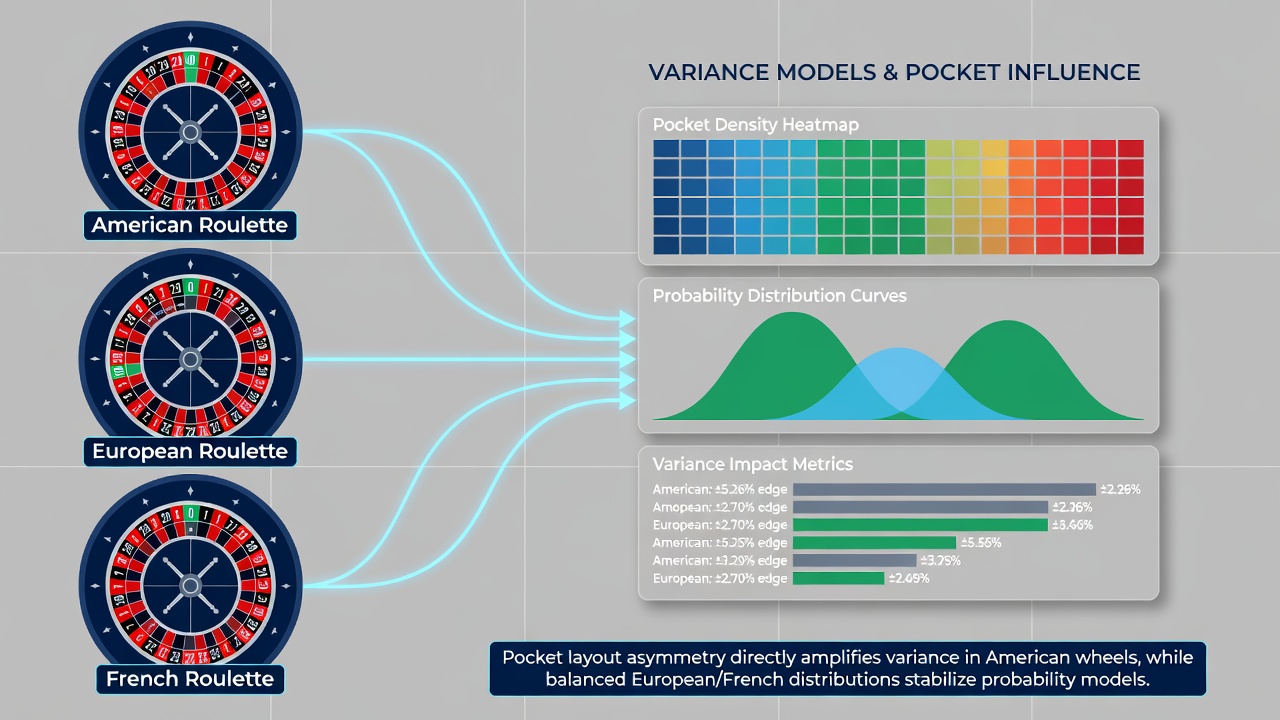
Variance models quantify the volatility of returns by incorporating the specific probabilities tied to each pocket layout, and certified systems calculate standard deviation values that reflect the higher house edge in American roulette compared to European versions, which produces wider swings in session outcomes according to figures compiled by international auditing bodies.
Those who analyze RNG data observe that platforms must recalibrate their models when deploying different formats because the additional pocket in American roulette increases variance by approximately 5.26 percent relative to single-zero wheels, and this adjustment ensures player return percentages remain within approved tolerances across all variants offered in regulated digital environments.
Studies conducted through academic partnerships with gaming authorities reveal that distribution tracing helps identify any clustering anomalies in RNG sequences, and operators integrate these findings into ongoing compliance reports that demonstrate how pocket patterns affect long-term variance without compromising the randomness required by law.
Comparative Analysis Across Formats
European and American distributions create distinct variance profiles because the extra pocket alters both the return-to-player ratio and the frequency of even-money payouts, while researchers compare these through simulation runs that isolate the impact of zero pockets on overall model stability, and data indicates that French rules further modify variance by returning half the stake on zero outcomes in certain cases.
Regulated platforms therefore maintain separate variance parameters for each format to satisfy certification criteria, and this separation allows accurate forecasting of payout distributions that testing organizations verify through repeated sampling of RNG outputs, whereas cross-format comparisons highlight how pocket counts serve as the primary driver of differences in volatility measures.
Regulatory Oversight and Compliance Practices
Authorities such as the Malta Gaming Authority require operators to submit variance model documentation that accounts for pocket distribution effects, and similar standards apply through bodies like the Alcohol and Gaming Commission of Ontario where RNG certifications include explicit checks on distribution fidelity across roulette types, while industry reports from organizations such as eCOGRA confirm that these practices reduce discrepancies in certified systems.
Testing protocols trace actual versus theoretical distributions by logging millions of generated spins, and any deviations trigger recalibration to preserve the integrity of variance calculations used for player protection assessments in digital settings.
Conclusion
Pocket distribution patterns across roulette formats establish the core parameters for variance models on certified RNG platforms, and regulatory environments enforce precise replication of these distributions to maintain fairness standards, while ongoing tracing methods and compliance updates ensure that platforms continue to align their systems with the mathematical realities of each wheel variant in use today.