Wheel Sequence Analysis Techniques Applied to Live Dealer Bonus Clearance Timelines in Mobile Platforms
Frankie Fischer · Sep 1, 2026

Wheel Sequence Analysis Techniques Applied to Live Dealer Bonus Clearance Timelines in Mobile Platforms
Wheel sequence analysis techniques track repeating patterns in roulette wheel outcomes across extended sessions, and operators apply these methods to adjust bonus clearance timelines on mobile live dealer platforms where players must meet wagering requirements within set periods. Data from multiple gaming jurisdictions shows that sequence mapping identifies clusters of numbers or sectors that appear more frequently during specific time windows, which in turn influences how bonus timers are structured to align with observed wheel behavior.
Core Elements of Sequence Mapping in Roulette Wheels
Technicians record every spin outcome in live dealer environments and feed the results into algorithms that detect non-random distributions, while mobile applications capture the same data streams through API connections that log timestamps alongside each result. Researchers at institutions such as the University of Nevada, Reno have documented how physical wheel biases emerge from manufacturing tolerances or maintenance cycles, and these documented biases become inputs for predictive models that estimate the number of spins required to clear a bonus before the deadline expires.
Sequence analysis distinguishes between short-term streaks and longer cyclical patterns by applying statistical tests including runs analysis and autocorrelation functions, yet mobile platforms integrate these calculations into real-time dashboards that display remaining wagering volume against projected spin counts. When a sequence indicates a bias toward certain high-value numbers, the system recalibrates the clearance timeline to reflect faster accumulation of required bets during those phases.
Integration with Live Dealer Bonus Structures
Live dealer bonuses on mobile devices typically impose clearance periods measured in hours or days, and sequence techniques supply the data needed to forecast how many spins will occur within those windows under current wheel conditions. Reports issued by the Nevada Gaming Control Board in 2025 detail how operators monitor wheel performance metrics to prevent bonus structures from becoming misaligned with actual gameplay speeds, and similar monitoring appears in platforms operating under the Malta Gaming Authority where cross-border mobile traffic requires consistent timing rules.
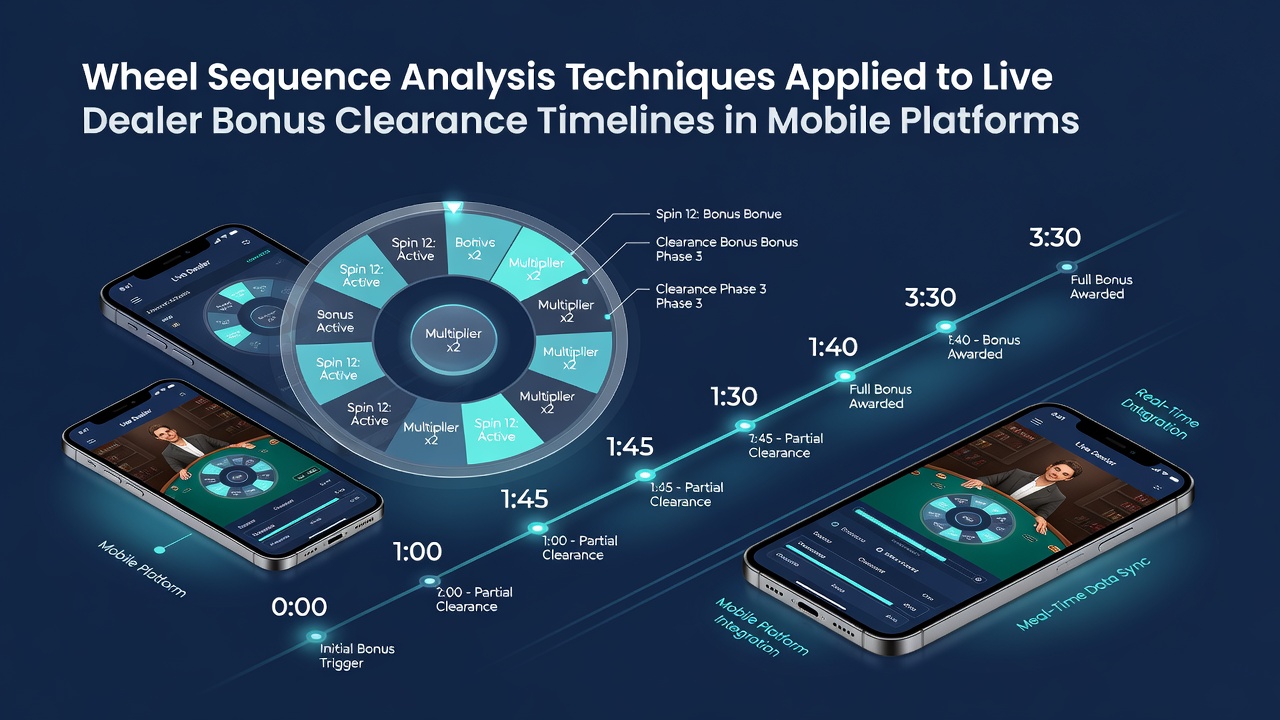
Platform engineers embed sequence detection modules that trigger adjustments when a detected pattern deviates from baseline expectations by more than two standard deviations, and these modules communicate directly with the bonus engine to extend or shorten clearance windows accordingly. In September 2026 several major mobile providers rolled out updated versions that incorporated machine-learning refinements to these modules, allowing the system to learn from historical clearance failures across thousands of user sessions without manual recalibration.
Mobile-Specific Technical Considerations
Mobile network latency and device processing power affect the speed at which sequence data reaches the analysis server, so developers optimize data packets to transmit only delta changes rather than full outcome lists, which preserves battery life while maintaining accuracy for timeline predictions. Studies published by the European Gaming and Betting Association indicate that platforms using compressed sequence feeds achieve clearance prediction errors below 4 percent compared with desktop counterparts, and this margin narrows further when 5G connections replace older mobile standards.
Security protocols require encryption of all sequence data transmitted between the live dealer studio and the mobile client, and regulators in multiple regions mandate that any timeline adjustment based on sequence analysis must remain transparent to the player through in-app notifications. Those notifications display projected completion times derived from the current sequence model rather than static averages, giving users factual updates based on real wheel performance.
Data Sources and Validation Methods
Validation of sequence models relies on back-testing against archived spin logs that span at least 100,000 outcomes, and independent auditors compare predicted clearance rates against actual player completion statistics collected under controlled conditions. Figures released by the Australian Communications and Media Authority for the 2025 calendar year show that mobile live dealer sessions using sequence-informed timelines recorded a 12 percent reduction in bonus forfeiture rates compared with sessions using fixed timelines.
Cross-validation occurs when operators share anonymized aggregate data with academic partners who apply additional filters to remove platform-specific artifacts, and the resulting refined models feed back into production systems through scheduled updates. This iterative process continues because wheel maintenance cycles and dealer rotation schedules introduce new variables that previous models have not yet encountered.
Conclusion
Wheel sequence analysis supplies measurable inputs that allow mobile live dealer platforms to align bonus clearance timelines with observed physical outcomes rather than relying solely on theoretical averages. Regulatory filings from multiple jurisdictions confirm that these techniques operate within existing compliance frameworks while delivering documented improvements in completion metrics. Continued refinement through back-testing and cross-regional data sharing supports ongoing alignment between wheel behavior and the timing structures that govern bonus usage on mobile devices.